
The Quiet Logic of Staying Too Long
She didn’t stay because she didn’t know better. She stayed because she understood more than she admitted. That’s the part people rush past.
The clean version of the story goes like this: she found out he was taken, she should have left, she didn’t, so now she’s the villain in someone else’s biography. Simple. Neat. Morally satisfying. Completely useless if you’re trying to understand how people actually make decisions. Because most people don’t stay in situations like that by accident.
They stay because something about the arrangement works—just not in a way they’re proud of explaining out loud. And that’s where it gets interesting.
The pattern is familiar. She finds out early—never as late as people claim. There’s always a moment. A small shift. A piece of information that doesn’t fit. A silence that says too much. She connects the dots, quietly. No dramatic confrontation. No public meltdown. Just a private recalibration.
From there, she makes a decision. Not once, but repeatedly.
Stay today. Re-evaluate tomorrow. Stay again.
Five years doesn’t happen in one choice. It happens in thousands of small, justified extensions.
Now, what people usually believe is simple: she lacked self-respect, or she was manipulated, or she was emotionally weak.
That explanation is comforting. It keeps the world predictable. Good people leave bad situations. Smart people don’t tolerate nonsense. End of story.
Except… that’s not how it plays out in real life. What’s actually happening is structural.

He wasn’t just “taken.” He was partially available. And partial availability is one of the most effective retention strategies ever invented—far more powerful than full commitment.
Because full commitment can be evaluated. It’s either there or it’s not. Partial commitment? That keeps the brain negotiating.
You’re not fully chosen, but you’re not fully rejected either. You exist in a gray space where hope has just enough oxygen to stay alive, but not enough clarity to resolve. And humans are remarkably patient when they think they’re one step away from clarity.
Add to that the intermittent reward cycle—attention, affection, withdrawal, return—and you don’t get a chaotic situation. You get a system. A very stable one. Unhealthy? Yes. Random? Not at all.
Let’s bring it closer to the ground. Imagine a man who never promises to leave his partner, but always implies dissatisfaction. He never says “you’re the future,” but he treats her like she’s the relief. The understanding one. The easy space. No pressure. No demands. No complications.
In other words, she becomes the environment where he gets to be a better version of himself—without having to restructure his actual life. And that role is dangerously seductive.
Not because she enjoys being second. But because she experiences a version of him that feels more real than the one his partner gets.
So she tells herself a story. Not a loud one. A quiet, reasonable one. “He’s different with me.” “It’s complicated.” “If things were different…”
Notice the language. It doesn’t claim certainty. It protects possibility. And possibility is the currency that keeps situations like this running longer than logic would allow.

Now here’s where responsibility gets messy. Because yes, he created the conditions. He maintained ambiguity. He benefited from both sides. But she participated in the structure once she understood it.
Not blindly. Not helplessly. Strategically, even if she wouldn’t use that word.
She learned the rhythms. She adjusted her expectations. She accepted fragments and rebranded them as progress. That’s not stupidity. That’s adaptation, and adaptation is very hard to walk away from once it starts working.
Because leaving doesn’t just mean losing him. It means confronting the time invested, the identity built around the situation, and the quiet negotiations she made with herself along the way.
Five years isn’t just a relationship. It’s a system of meaning. And systems don’t collapse easily, even when they stop serving you.
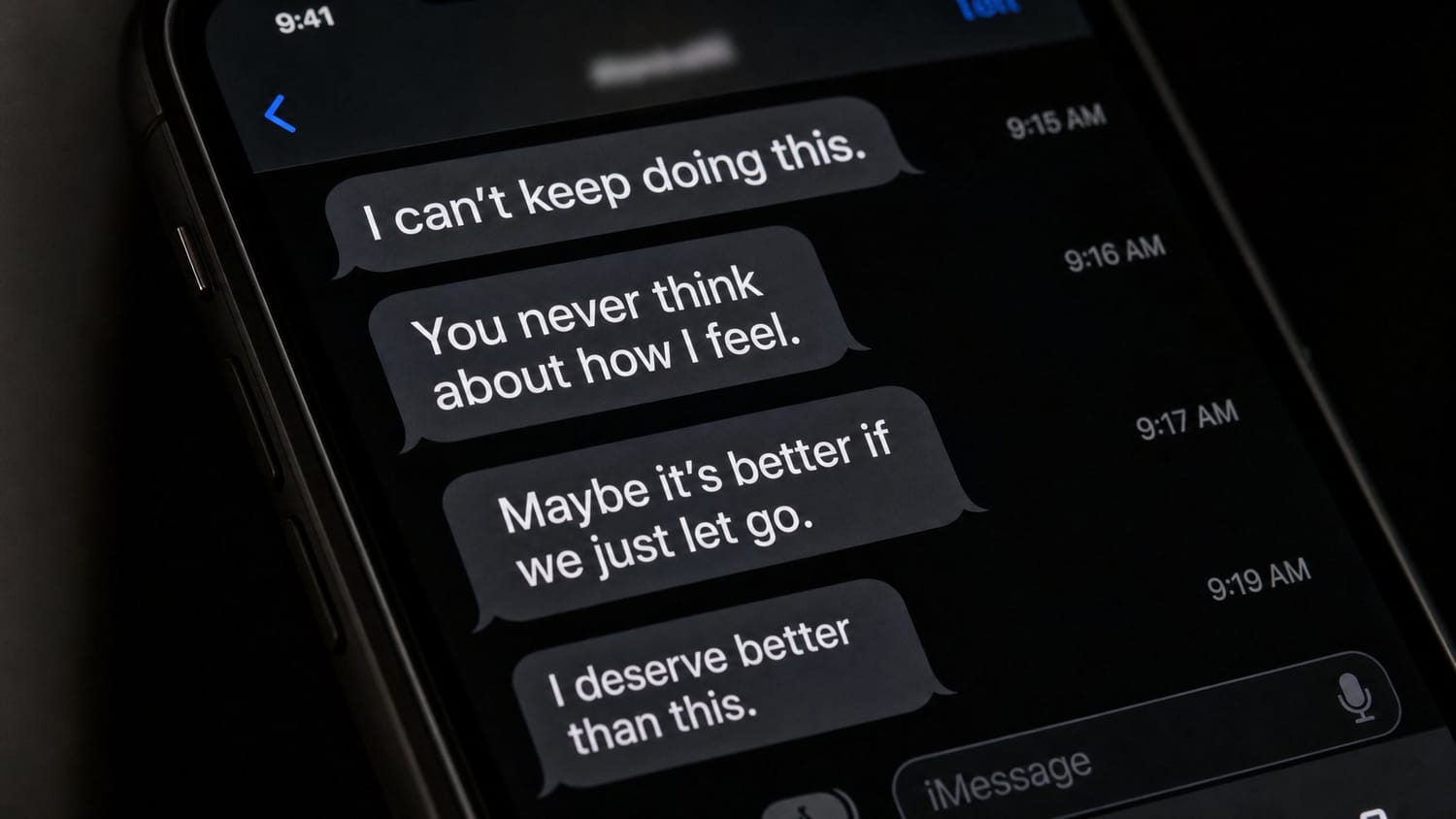
Here’s the breakdown most people avoid. The situation persists because it meets three hidden needs:
Emotional intensity without full responsibility
A sense of being chosen—just not publicly
The illusion of control in an uncontrollable dynamic
That combination creates a loop. She feels special, but not secure. She feels close, but not settled. She feels involved, but not accountable in the same way a primary partner would be.
It’s unstable, but it’s also… manageable. Until it isn’t.
Now, if you’re looking for a clean answer to “who’s responsible?” you won’t find one that satisfies your sense of justice. Responsibility here isn’t a single person. It’s a shared maintenance of a structure that benefits both, just unequally.
He benefits more obviously. She benefits more subtly. And subtle benefits are harder to admit, which is why they last longer.
The real question isn’t who’s to blame. It’s this:
At what point does understanding a situation make you responsible for continuing it? Because awareness changes the math.
The moment she knew, the situation stopped being something that was happening to her, and became something she was participating in.
Not equally. But consciously. And that’s the uncomfortable shift most people avoid. Not because it’s harsh, but because it removes the illusion that time alone will fix things.

Time doesn’t fix structures. It reinforces them. If you stay in a pattern long enough, it stops feeling like a choice and starts feeling like reality. And reality is very hard to argue with, even when it’s self-constructed.
There’s a quiet principle underneath all of this:
People don’t stay where they are treated badly.
They stay where their needs are met in a way they don’t fully understand.
Once you see that, situations like this stop looking irrational. They start looking… engineered. Not always intentionally. But effectively.
If you want something practical out of this, it’s not “leave immediately” or “never tolerate less.” That kind of advice sounds good and changes nothing.
A more useful takeaway is this:
Pay attention to what a situation is training you to accept.
Not what it promises. Not what it hints at. Not what it could become.
What it consistently allows.
Because whatever you repeatedly accept becomes your new baseline. Quietly. Gradually. Permanently. And baselines are harder to raise than boundaries are to set.
If you were watching this situation from the outside—no emotion, no history—what would you call it? Not what you hope it is. What it actually is.
That answer tends to be more honest than anything we tell ourselves from the inside. And honesty, while not particularly comforting, is usually more useful than hope.
Build a Life That Doesn’t Quietly Exhaust You.
Island View is a weekly note exploring human behavior, autonomy, and practical ways to redesign the way you live and work.
No productivity theatre. No guru energy.
Don’t Just Earn. Design.
If this made you think differently about work and ownership, you’ll like Island View.
Each week: behaviour, boundaries, ambition, and building a life that funds you without owning you.


Island View
A thoughtful exploration of human behaviour and building a life you don’t need a vacation from.
Stay Sharp
Get Island View weekly.
Clear thinking. Subtle satire. No noise.